


Pricing a content platform gets harder when the bill depends on how much you run through it. AirOps is a strong example of the trade: its workflow builder, Grids and Quill agent let a team with a builder on staff turn almost any content process into a repeatable workflow, and Page360 ties AI citations to Google Search Console and GA4 data page by page. The catch is cost visibility. Solo and Pro carry no published price, Solo tracks ChatGPT only, and on AirOps' newer billing model AI visibility tracking draws from the same task balance as content production.
The nine AirOps alternatives below cover both halves of the platform, tracking and content, and each prints a self-serve price except one enterprise pick. Prices and engine coverage were checked on each vendor's site in November 2026.
Key takeaways
- Closest like-for-like: Geoptie and Writesonic both pair AI visibility tracking with content work in one plan; Geoptie starts at $49 with seven engines, Writesonic at $99 with three.
- Cheapest multi-engine tracking plus content: Geoptie at $49 a month, with Claude, Perplexity and Gemini included and no limit on content generation.
- Tracking first: Peec AI ($95 a month) suits teams that mostly used AirOps Insights, with an agent for content on top.
- Writing only: Jasper Pro ($69 per seat) replaces the writer, not the tracker; its GEO features sit on the custom-priced Business plan.
- The AirOps billing fact: on AirOps' newer billing, a tracked Claude answer costs four tasks from the same balance that pays for content.
How AirOps bills tracking and content in 2026
AirOps sells three plans, and only the task allowances are public.
| Plan | Published price | AI engines tracked | Tasks a month | Seats |
|---|---|---|---|---|
| Solo | Not published | ChatGPT only | 35,000 | 1 |
| Pro | Not published | "10+ answer engines" per AirOps, Claude included | 100,000 | Unlimited |
| Enterprise | Custom | Same set, custom prompt and page limits | Custom | Unlimited |
Three things in that table shape the buying decision.
No price before the trial. AirOps publishes no price for Solo or Pro, new accounts start with a 14-day free trial, and AirOps says pricing depends on task volume and needs. Extra tasks on Solo cost $0.025 each; Pro overage terms are not published.
Multi-engine tracking starts on Pro. Solo watches ChatGPT alone. Claude, Gemini, Perplexity, Google AI Mode, Google AI Overviews, Microsoft Copilot and Grok come with Pro, so the plan with a single user is also the plan with a single engine.
Tracking and content share one meter. On AirOps' newer "combined task billing", every tracked answer debits the same monthly balance as workflows and drafts. Each prompt runs daily for every engine, region and persona configured, and a Claude answer costs four tasks. Three engines, two regions and two extra personas already make 540 answers a month for a single prompt. Workspaces that have not yet moved still pay for tracking from separate Answer Credits.
AirOps alternatives compared
| Tool | Best for | Starting price (monthly) | AI engines at that price | Content work at that price | Billed by |
|---|---|---|---|---|---|
| AirOps (for reference) | Teams with an in-house builder who want custom content workflows | Not published (14-day trial) | ChatGPT on Solo | 35,000 tasks, shared with tracking on the newer billing | Tasks |
| Geoptie | Teams and agencies that want tracking and the content work to act on it | $49 | ChatGPT, Claude, Perplexity, Gemini, Google AI Overviews, Google AI Mode, Microsoft Copilot | Unlimited audits, recommendations, content generation and optimization | Flat plan |
| Writesonic | Teams that want tracking plus AI articles and site audits in one tool | $99 | ChatGPT, Gemini, Google AI Overviews | 15 AI articles, 10 site audits | Flat plan |
| Profound | Enterprises buying tracking and content agents through sales | Free 7-day trial, then custom | ChatGPT, Gemini, Google AI Overviews on the trial | Limited AI Marketer credits on the trial | Custom contract |
| AthenaHQ | Teams that want many engines on one plan and can budget in credits | Free; $295 for Starter | 5 free; 11 on Starter | Content recommendations free; article drafting on content credits | Credits |
| Peec AI | Teams that mainly used AirOps Insights | $95 | 3, chosen from 8 (no Claude) | 500 agent credits | Flat plan |
| Frase | Content teams that want an agent to write, publish and refresh | $49 | ChatGPT, Google AI | 10 articles, 50 audit pages | Flat plan |
| Surfer | Writers who optimize pages against what already ranks | $95 tracking only; $119 Standard | 5 on the $95 plan; ChatGPT only on Standard | None on the $95 plan; 360 documents on Standard | Flat plan |
| Semrush | SEO teams already working in Semrush | $99 per domain | ChatGPT, Gemini, Google AI Mode, Google AI Overviews (Perplexity in weekly brand reports) | AI-readiness site audit; Content Toolkit from $60 extra | Per domain |
| Jasper | Marketing teams producing on-brand content at volume | $69 per seat | None on Pro | Brand-governed writing and 100+ agents | Per seat |
Prices are monthly billing as each vendor listed them in November 2026.
How these alternatives were picked
The list follows the tools AI assistants and the most-cited comparison pages name most often for AirOps questions, with prices and engine coverage checked on each vendor's own pages. Geoptie, which publishes this guide, comes first. The rest run from platforms built for AI search, through a tracker, to SEO content tools that added AI tracking, and end with a pure writer.
1. Geoptie (best for teams that want tracking and content work from $49 a month)
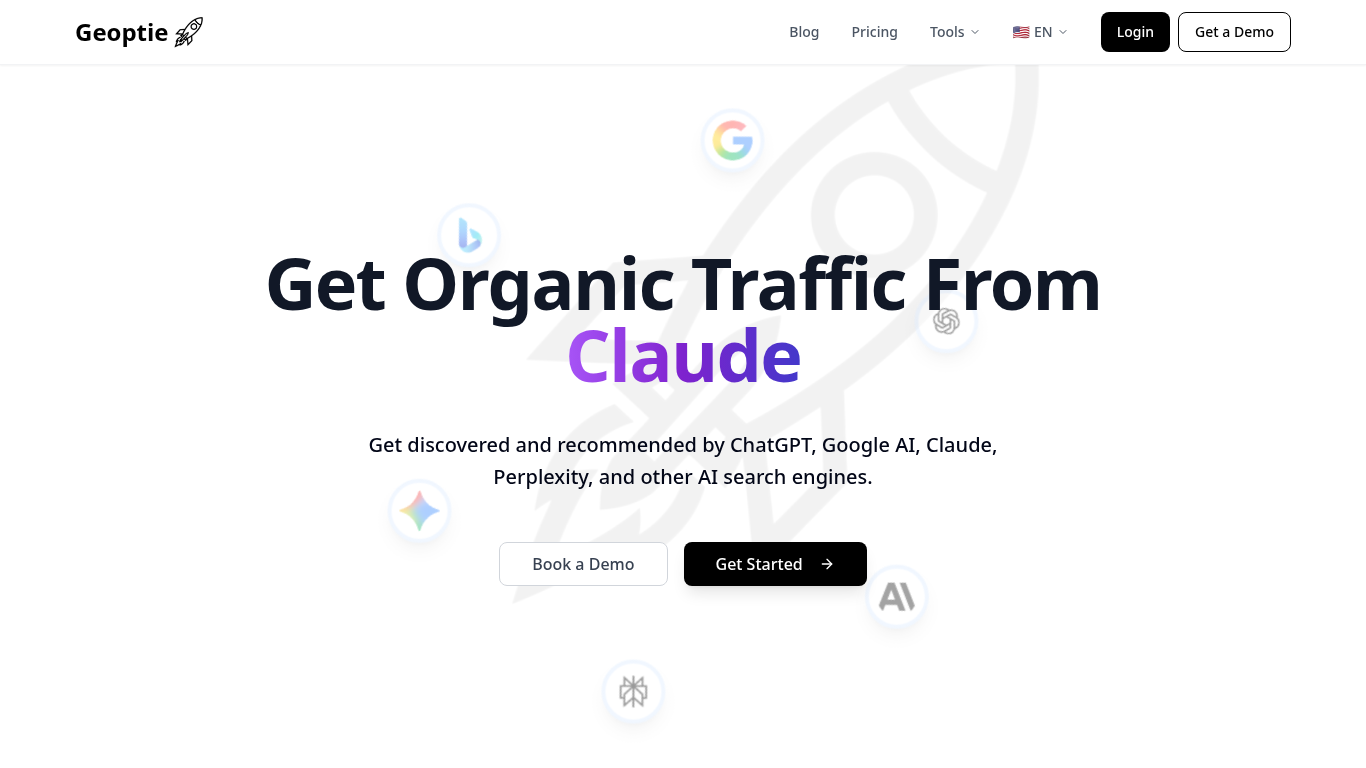
If you used AirOps for both tracking and content, Geoptie covers both on a flat plan with nothing metered per answer.
About
Geoptie keeps the loop AirOps is known for, from AI visibility data to the content that changes it, without asking anyone to build workflows. Prompts are tracked daily on ChatGPT, Claude, Perplexity, Gemini, Google AI Overviews, Google AI Mode and Microsoft Copilot, with each brand tracking any four of the seven. From the same dashboard a team runs audits, gets prompt-level recommendations and generates or optimizes briefs and drafts, all unlimited from the $49 Starter plan. The bill does not move when a team adds Claude or writes more: there are no tasks or credits to watch. Where AirOps wins is customization; there is no workflow builder here, and teams that want bespoke multi-step pipelines will miss it.
Key features
- Daily mentions, citations, sentiment and competitor share of voice per prompt
- Cited pages and domains in the order each engine cited them
- Unlimited audits, recommendations, content generation and optimization on every plan
- White-label reports, REST API and MCP server from Professional
- Tracking in 123 countries, unlimited seats
Pricing
- Starter: $49/mo ($41/mo annually): 15 prompts, 2 brands
- Professional: $99/mo ($83/mo annually): 100 prompts, 10 brands, white-label reports, API and MCP
- Business: $249/mo ($208/mo annually): 300 prompts, unlimited brands
- No free plan or trial; the free GEO content checker and free audit show the approach first. Details on Geoptie's plans.
Pros
- Claude and six other engines on the entry plan
- Content generation and optimization with no monthly quota
- Unlimited seats on every plan
Cons
- No workflow builder or Grid-style bulk editing
- No free trial
- No Grok tracking
Verdict: the most direct replacement for teams that used AirOps to see their AI visibility and then act on it.
2. Writesonic (best for teams that want tracking plus AI articles and site audits)
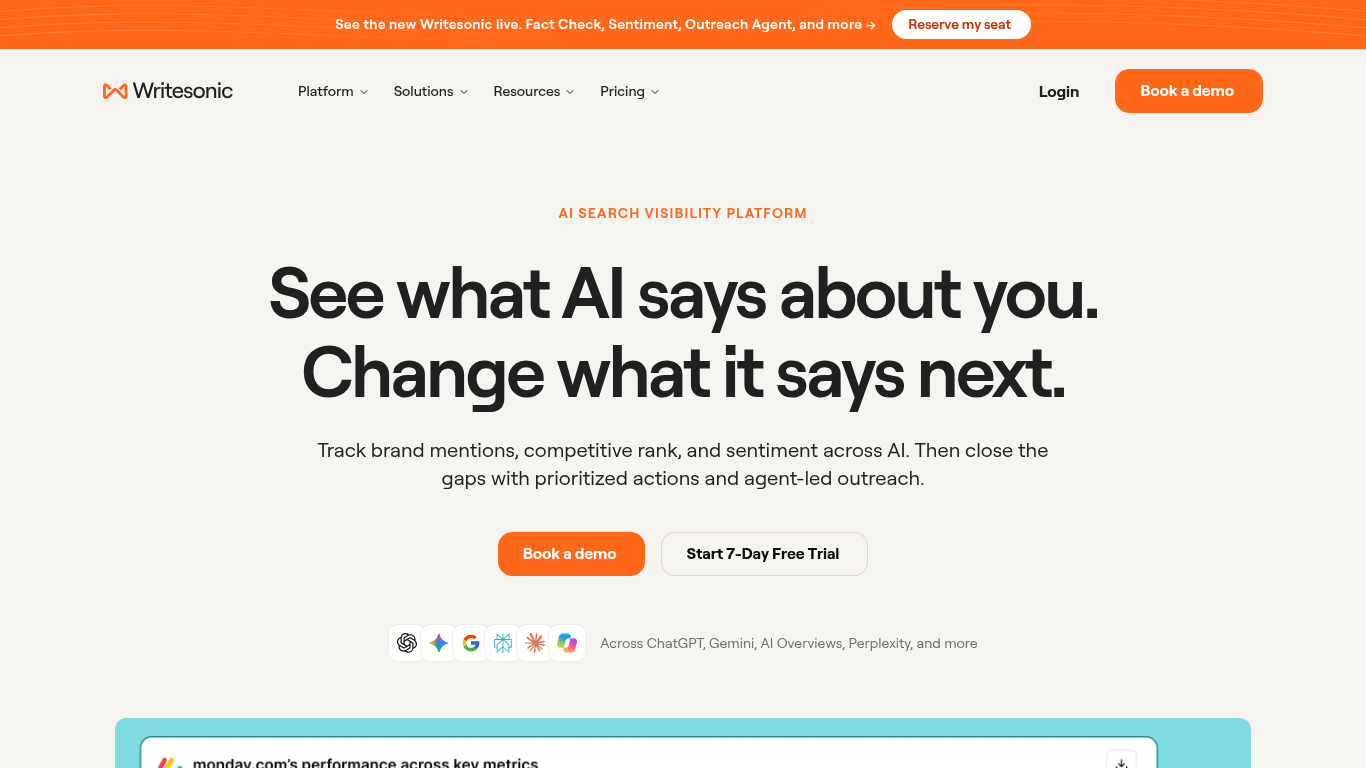
If you used AirOps mainly to publish articles and want visibility data beside them, Writesonic is the closest bundle.
About
Writesonic started as an AI writer and now sells AI search visibility with content attached, which makes it the alternative AI assistants most often call the closest overall replacement for AirOps. Every self-serve plan tracks ChatGPT, Gemini and Google AI Overviews daily and comes with a monthly allowance of AI articles and site audits, so a small team gets a working routine without designing anything. The limits show up in two places. Claude, Perplexity, Copilot and AI Mode are Enterprise-only, and articles are capped per plan, so a team that published heavily through AirOps may hit the ceiling. The Writesonic alternatives guide covers its own competitors.
Key features
- Daily tracking on ChatGPT, Gemini and Google AI Overviews
- AI article writer with brand voice styles
- Site audits and content optimization
- Sentiment analysis from Growth; agent workflows on trial runs
Pricing
- Starter: $99/mo: 50 prompts, 15 articles, 10 site audits, 1 user
- Basic: $249/mo: 100 prompts, 25 articles, 2 users
- Growth: $499/mo: 200 prompts, 50 articles, 3 users
- Enterprise: custom, with nine platforms including Claude and Perplexity
- Seven-day free trial with no card; 20% off annually
Pros
- Tracking and writing in one plan with published prices
- Little setup compared with building workflows
Cons
- Three engines below Enterprise
- Article caps on every plan; extra users on Basic and Growth cost $50 a month each
Verdict: the nearest like-for-like swap for teams that want both halves of AirOps and can live with three engines.
3. Profound (best for enterprises buying tracking and content agents through sales)
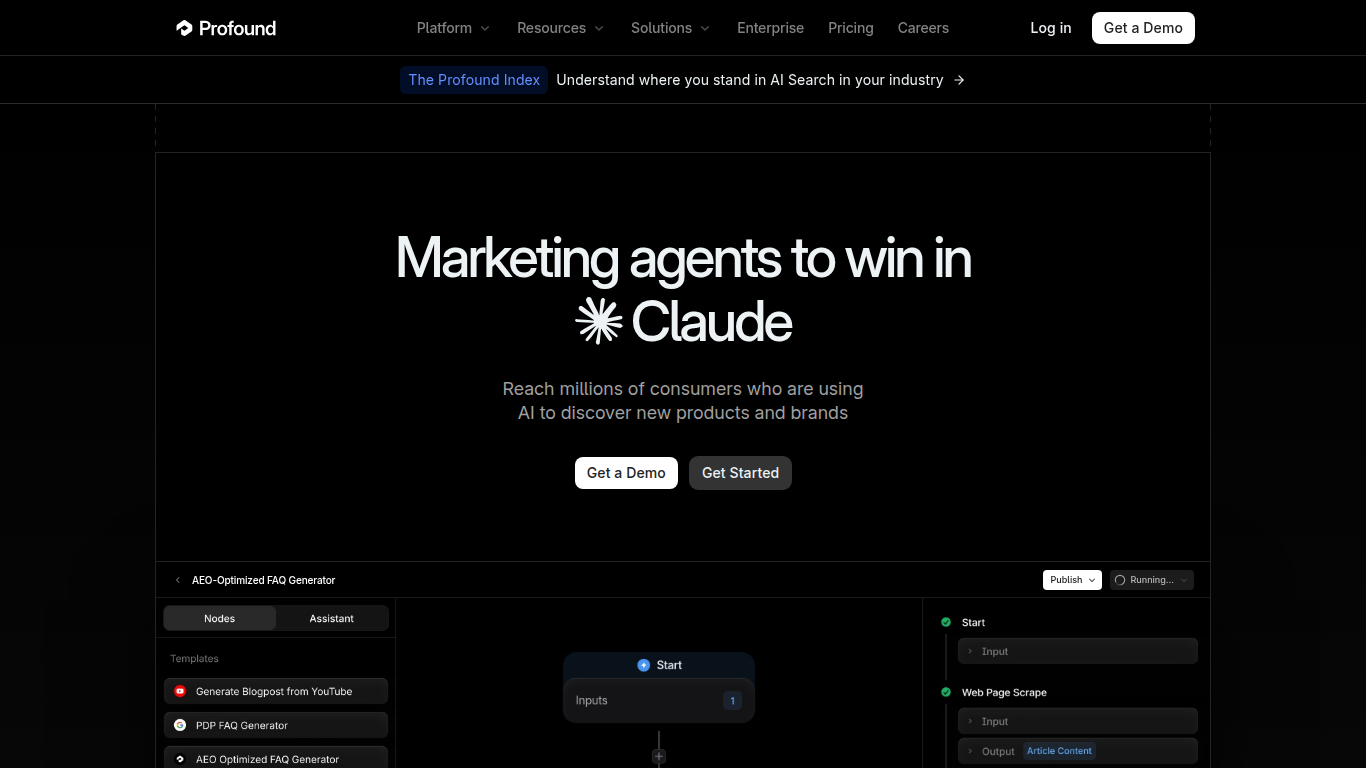
If AirOps' missing price list was not the problem and depth of data is, Profound is the enterprise pick.
About
Profound appears on more AirOps comparison pages than almost any other tool, and like AirOps Pro it shows no price list; beyond a free trial, Profound is bought through a demo. Brands get a free seven-day trial that runs 50 recommended prompts daily on ChatGPT, Gemini and Google AI Overviews, then a custom Enterprise contract tracking up to ten engines, Claude included, with SSO, full history, exports and API access. Its AI Marketer agents brief and draft content on credits. For a team that left AirOps because it wanted a number before a demo, Profound has the same shape; for a team that wanted richer citation data and enterprise controls, it is the stronger platform. The Profound alternatives guide covers the field around it.
Key features
- Citation analysis down to individual cited URLs, competitor sources included
- AI Marketer agents for content, paid in credits
- Up to ten engines on Enterprise
- SSO, SOC 2 and API access on Enterprise
Pricing
- Trial: free for seven days: 50 prompts daily on three engines, limited agent credits, no exports
- Enterprise: custom, by demo
- Agency pricing (separate from brand plans): Agency Growth from $99/mo plus $399/mo per full client workspace
Pros
- Deep citation and source data
- Enterprise compliance and support
Cons
- No self-serve brand plan with a price
- Claude only on the Enterprise contract
Verdict: right for enterprises that want depth and will buy through sales; not an escape from unpublished pricing.
4. AthenaHQ (best for teams that want many engines on one plan and can budget in credits)
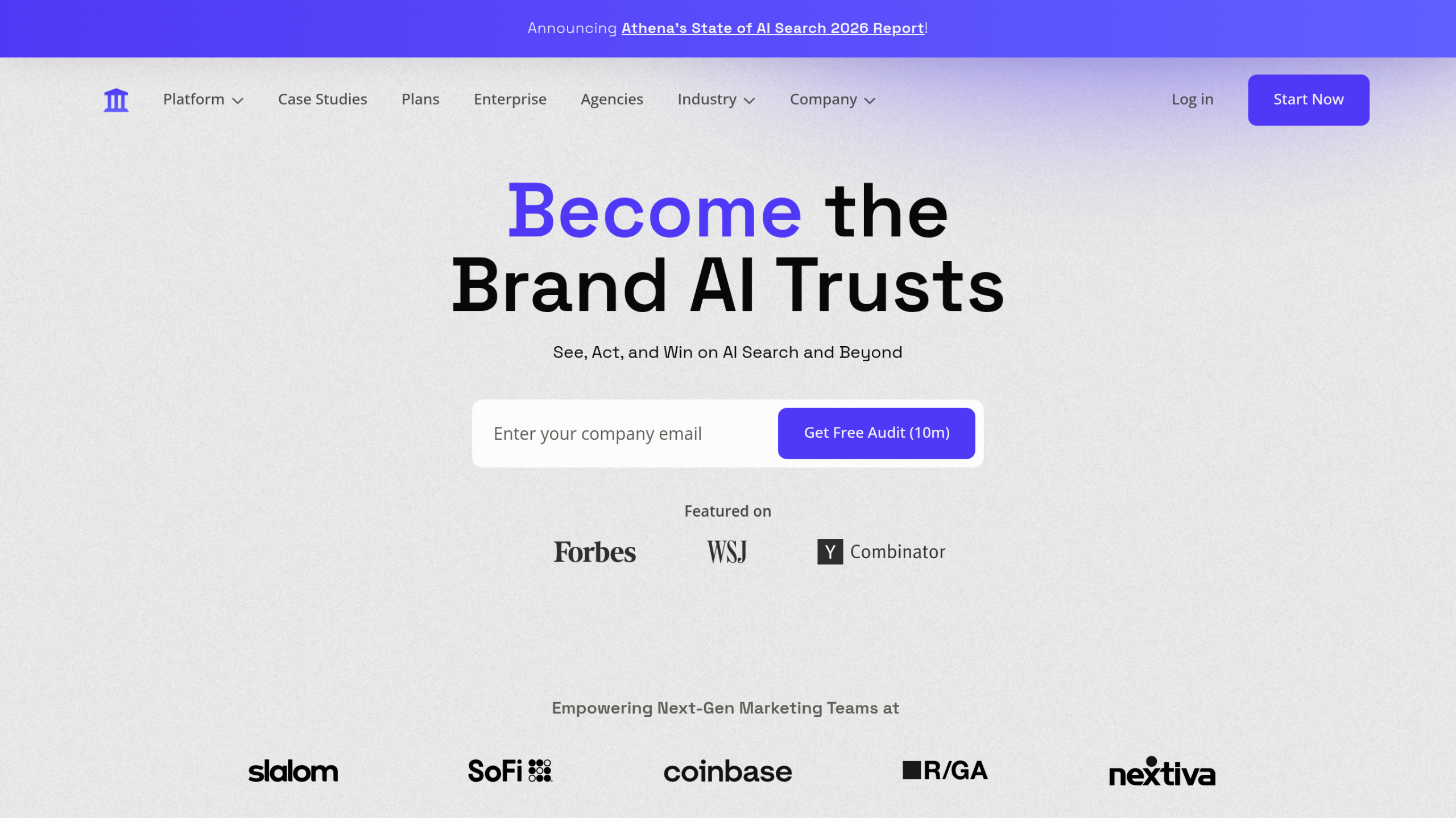
If you used AirOps for multi-engine tracking and want the widest engine list on one published plan, AthenaHQ is the credit-based option.
About
AthenaHQ swaps AirOps' tasks for credits, but with a published price and a free door in. The Essential tier costs nothing and tracks ChatGPT, Perplexity, Google AI Overviews, Gemini and Copilot on 300 credits a month, which is enough to see whether the dashboard fits. Starter, at $295 a month, opens 11 models including Claude, Google AI Mode, Grok and DeepSeek, with 3,600 credits plus a $300 monthly credit allowance. A ChatGPT or Perplexity answer costs one credit, while Claude, Grok and DeepSeek cost five each, so the forecasting habit an AirOps team already has carries over. AthenaHQ also drafts articles through its Write flow. The AthenaHQ alternatives guide covers its competitors.
Key features
- 11 models on Starter, Claude included
- Prompt and response analysis with source and competitor insights
- Content recommendations and article drafting
- Unlimited members with role-based access
Pricing
- Essential: free: 300 credits, five engines
- Starter: $295/mo: 3,600 credits plus $300/mo in free credit, 11 models
- Enterprise: custom
- 17% off annually; API access is a paid add-on on Starter
Pros
- Free tier with five engines
- Claude and AI Mode on a published plan
Cons
- A steep jump from free to $295
- Usage still has to be budgeted in credits
Verdict: a good fit for teams comfortable with metered usage that want the longest engine list at a public price.
5. Peec AI (best for teams that mainly used AirOps Insights)
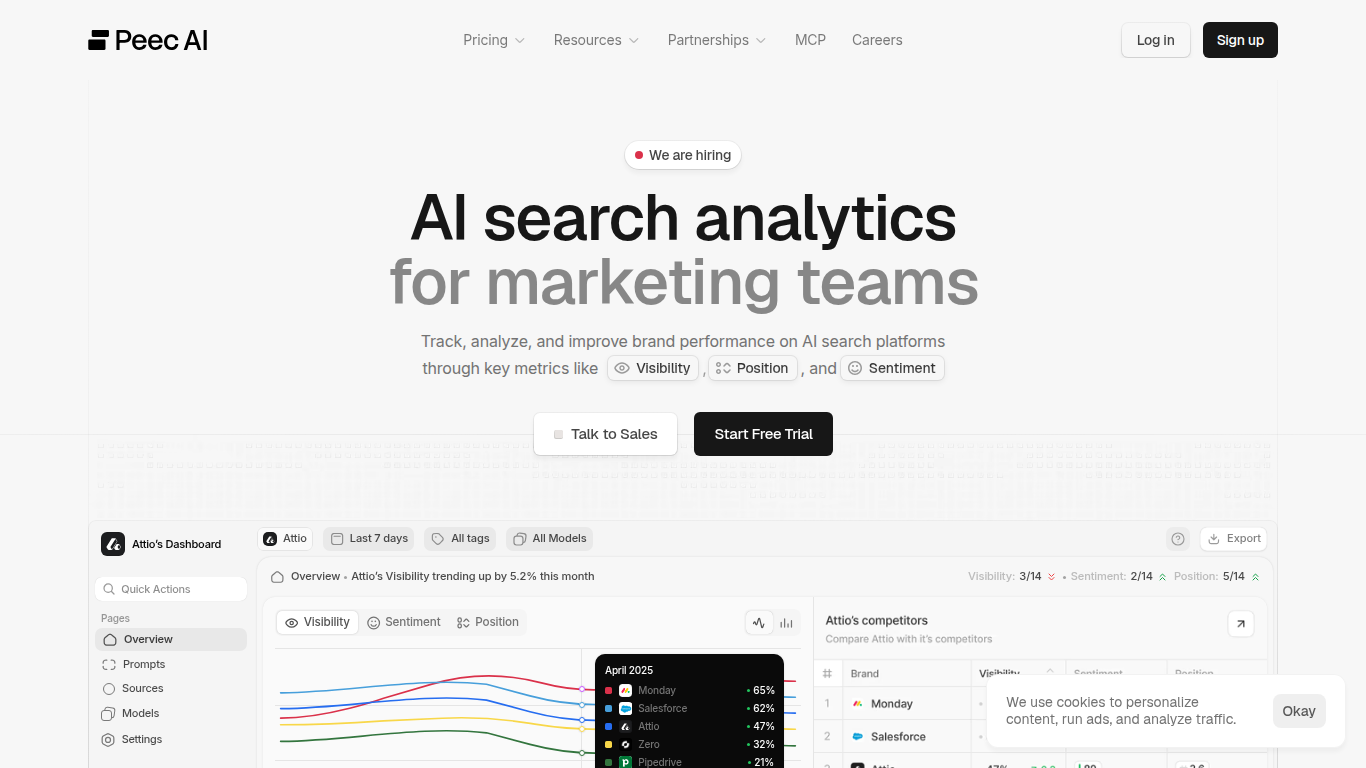
If the Insights tab was the part of AirOps you opened every week, Peec AI is the tracker-first replacement.
About
Peec AI is a tracker-first pick for teams that want AI visibility data without a content platform around it. Every plan tracks prompts daily on three models chosen from ChatGPT, Perplexity, Google AI Overviews, Google AI Mode, Gemini, Naver, ERNIE and Bing AI Mode, with unlimited users and a strong source view: cited URLs, citation share and the sources that name competitors but not you. Peec Agent now drafts and optimizes content on a monthly allowance of agent credits, so the action side is not empty. Claude stays on Enterprise, and the three-model limit holds on every self-serve plan. The Peec AI alternatives guide covers its own competitors.
Key features
- Source analysis, including sources that cite competitors but not you
- Sentiment and brand-perception reporting
- Peec Agent for content gaps, drafts and corrections
- MCP on every plan; API from Pro
Pricing
- Starter: $95/mo: 50 prompts, 1 project, 500 agent credits
- Pro: $245/mo: 150 prompts, 2 projects, 750 agent credits
- Advanced: $495/mo: 350 prompts, 5 projects, 1,000 agent credits
- Enterprise: custom; free trial (card required at sign-up); 15% off annually
Pros
- Clear published prices and unlimited users
- Strong citation and source reporting
Cons
- Three models per plan, no Claude below Enterprise
- One country per project on Starter
Verdict: the best choice for teams that only needed AirOps' tracking and want a cleaner, priced tracker.
6. Frase (best for content teams that want an agent to write, publish and refresh)
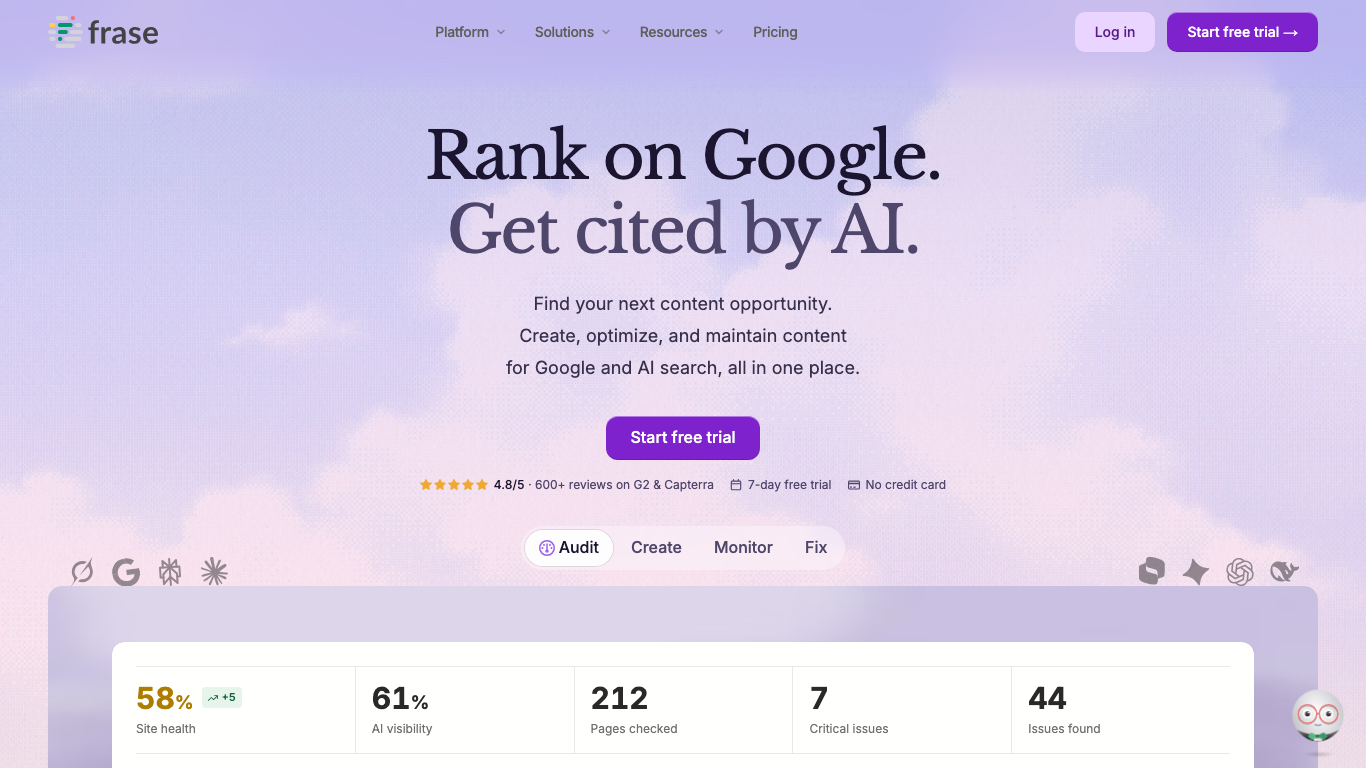
If you used AirOps to research, write and refresh pages, Frase does that work out of the box, with AI tracking included.
About
Frase is a content platform first: its agent researches a topic, drafts the article and publishes to WordPress, Webflow, Sanity, Wix or Frase's own CMS, and Content Guard watches published pages for Google decay and drafts the fix. Since its 2026 repricing every plan also tracks AI engines, which most AirOps comparisons have not caught up with. The entry plan is light on tracking, though: Starter covers ChatGPT and Google AI on 20 prompts, Perplexity arrives on Professional and Claude and Gemini only on Scale. For a content team that wants AirOps-style production without designing workflows, it is the most natural fit.
Key features
- Agent that drafts and can auto-publish on any plan
- Content Guard for rank and traffic decay, with drafted fixes
- SEO and GEO scores and site audits, with internal linking suggestions from Professional
- AI Visibility monitoring with daily alerts
Pricing
- Starter: $49/mo: 10 articles, 50 audit pages, ChatGPT and Google AI on 20 prompts
- Professional: $129/mo: 40 articles, 3 seats, adds Perplexity, 50 prompts
- Scale: $299/mo: 100 articles, 5 seats, adds Claude and Gemini, 75 prompts
- Seven-day free trial with no card; 20% off annually
Pros
- Production and publishing work without setup
- Starter stops at its limits, so no surprise bill
Cons
- Two engines and 20 prompts at the entry price
- Claude tracking starts at $299
Verdict: the strongest pick for teams that mostly used AirOps to produce and refresh content.
7. Surfer (best for writers who optimize pages against what already ranks)
If your AirOps workflows mostly optimized existing pages, Surfer's editor does it with a tracker beside it.
About
Surfer's Content Editor scores a draft against the pages that already rank as you write, and Topical Map, Content Audit and the Surfy assistant sit around it. Its AI Tracker follows ChatGPT, Perplexity, Google AI Mode, Google AI Overviews and Gemini, with mention gaps and competitor share of voice. Plan choice matters more here than with most tools. Standard at $119 tracks ChatGPT only, weekly, while daily five-engine tracking needs Pro at $219 or the tracking-only AI Search Analytics plan at $95. Claude is not tracked on any plan. A writer who lived in AirOps' refresh workflows will find Surfer's editor faster for page-level work.
Key features
- Content Editor with Content Score and real-time guidelines
- AI Tracker with mention gaps, sentiment and share of voice
- Topical Map, Content Audit and rank-drop alerts
- WordPress and Google Docs integrations
Pricing
- AI Search Analytics: $95/mo: tracking only, 50 prompts daily on five engines
- Standard: $119/mo: 360 documents, ChatGPT only, 25 prompts weekly
- Pro: $219/mo: 360 documents, five engines, 50 prompts daily
- Peace of Mind: $359/mo: unlimited documents (fair use), 100 prompts daily
- Seven-day free trial; up to 17% off annually
Pros
- A mature on-page editor
- A tracking-only plan for teams that write elsewhere
Cons
- No Claude on any plan
- Daily multi-engine tracking starts at $219 on the content plans
Verdict: the right choice for writers who want an editor first and AI tracking second.
8. Semrush (best for SEO teams already working in Semrush)
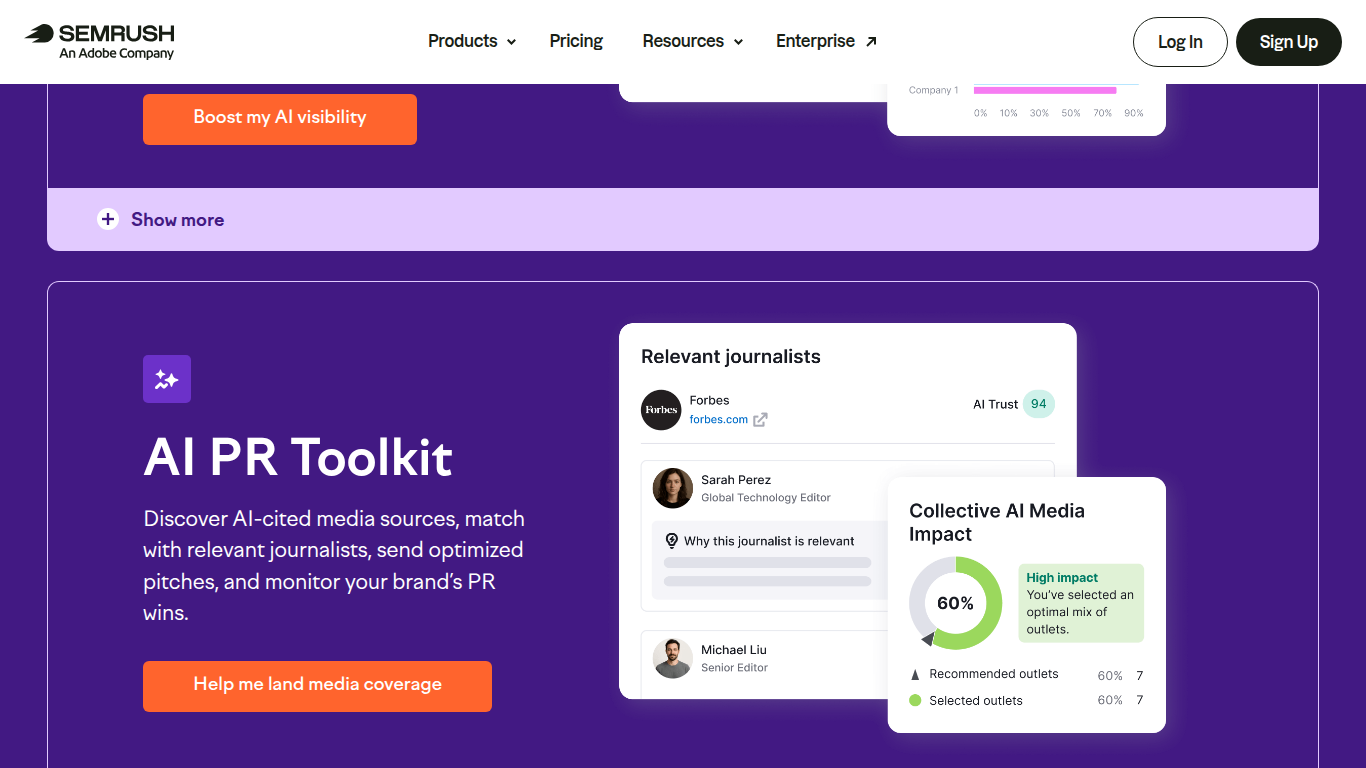
If AirOps sat next to Semrush in your stack, Semrush can now carry the AI visibility half itself.
About
Semrush sells AI visibility two ways. The standalone AI Visibility toolkit costs $99 a month per domain and tracks 25 prompts daily on ChatGPT, Gemini, Google AI Mode and Google AI Overviews, with weekly brand reports that add Perplexity, plus prompt research, competitor analysis and an AI-readiness site audit. Bundled into the Semrush One SEO plans it starts at $199 with 50 daily prompts. Content is a separate purchase, the Content Toolkit from $60 a month, so Semrush replaces AirOps' tracking more directly than its production. Claude is only on a custom enterprise package. The Semrush AI Visibility Toolkit alternatives guide covers it in detail.
Key features
- Brand performance, sentiment and narrative reports
- Prompt research and AI competitor analysis
- AI-readiness site audit
- Full SEO suite on the bundled plans
Pricing
- AI Visibility: $99/mo per domain: 25 prompts, one user, no free trial
- Semrush One Starter: $199/mo: SEO suite plus 50 daily prompts
- Semrush One Pro+: $299/mo: 100 daily prompts, content optimization
- Content Toolkit from $60/mo; up to 17% off annually
Pros
- AI data next to keyword and backlink data
- Detailed sentiment and narrative reporting
Cons
- 25 prompts on the $99 plan, and each extra toolkit user needs their own licence
- Content work costs extra
Verdict: sensible for teams already paying for Semrush; a narrow replacement for AirOps' content side.
9. Jasper (best for marketing teams producing on-brand content at volume)
If you used AirOps as a writing engine and never opened Insights, Jasper replaces the writer.
About
Jasper is built around brand control: Jasper IQ stores brand voices, product knowledge and audiences, and more than 100 prebuilt marketing agents produce on-brand copy across channels. Pro costs $69 per seat a month and covers the writing work well. AI visibility monitoring and the GEO agents sit on the custom-priced Business plan, along with the no-code agent builder, Jasper Grid and API access, so the parts closest to AirOps come with the same unpublished pricing as AirOps Pro. For a team that only needs content, Pro is the cleaner buy.
Key features
- Brand Voice, Knowledge and Audiences applied to every output
- 100+ marketing agents and the Canvas editor
- Image generation and editing
- GEO monitoring and agents on Business
Pricing
- Pro: $69 per seat per month ($59 annually): 2 brand voices, 5 knowledge assets, 3 audiences
- Business: custom: unlimited IQ, custom agents, Jasper Grid, API, GEO features
- Seven-day free trial
Pros
- Strong brand-voice control across a team
- Large library of ready-made marketing agents
Cons
- No AI visibility tracking on Pro
- Per-seat pricing adds up for larger teams
Verdict: a good replacement for AirOps' writing side only; pair it with a tracker if visibility matters.
How to choose the right AirOps alternative
Which half of AirOps do you use?
If it was both, start with Geoptie, Writesonic or AthenaHQ. If it was mostly Insights, look at Peec AI or Surfer's tracking-only plan. If it was mostly the writer, Frase and Jasper fit better.
Which engines do you need at the entry price?
Claude is the usual dividing line. Geoptie includes it from $49 and AthenaHQ from $295, while Frase reaches it at $299 and Writesonic, Peec AI, Profound and Semrush keep it for enterprise contracts. Surfer does not track it at all.
Do you want to build workflows or have the content work built in?
Teams with a builder who enjoy designing pipelines lose the most by leaving AirOps. Teams that want the work done without designing it get more from a tool with recommendations and drafting built in.
FAQ
What are the best AirOps alternatives in 2026?
Geoptie, Writesonic, Profound, AthenaHQ, Peec AI, Frase, Surfer, Semrush and Jasper. Geoptie suits teams that want AI visibility tracking and the content work to act on it for a flat $49 a month, Writesonic is the closest like-for-like bundle, and Profound is the enterprise option. Peec AI fits teams that mostly used AirOps Insights, and Jasper fits teams that mostly used it to write.
How much does AirOps cost?
AirOps publishes no price for its Solo or Pro plans, and Enterprise is quoted by sales. New accounts start with a 14-day free trial, and AirOps says pricing depends on task volume. Solo includes 35,000 tasks a month and charges $0.025 per extra task; Pro includes 100,000 tasks and unlimited seats.
Does AirOps use tasks for AI visibility tracking?
On AirOps' newer billing model, yes. Every tracked AI answer draws from the same monthly task balance as workflows and content production, and each prompt runs once a day for every engine, region and persona you set up. Workspaces still on the older model pay for tracking from a separate Answer Credit balance instead.
Does AirOps track Claude?
Yes, from the Pro plan up. Solo tracks ChatGPT only, and Pro adds Claude alongside Gemini, Perplexity, Google AI Mode, Google AI Overviews, Microsoft Copilot and Grok. On AirOps' newer billing model, each Claude answer costs four tasks against one for most other engines, so Claude tracking uses up a plan's allowance faster.
What is the closest alternative to AirOps?
For teams that use both halves of AirOps, the closest alternatives pair AI visibility tracking with content work in one plan: Geoptie, Writesonic, AthenaHQ and Profound. Geoptie does it on a flat plan from $49 a month with seven engines, Writesonic from $99 with three engines and an article quota. Teams that only used the workflow builder are better served by an automation tool than by any of these.
What is the cheapest AirOps alternative that tracks AI visibility and creates content?
AthenaHQ's free Essential tier tracks five engines on 300 credits a month and gives content recommendations, which is enough to try the product. Among paid plans, Geoptie and Frase both start at $49 a month: Geoptie with seven engines, Claude included, and unlimited content generation, Frase with ChatGPT and Google AI tracking and 10 articles a month.
Can I rebuild AirOps-style workflows with n8n or Zapier?
Partly. Automation tools such as n8n and Zapier can chain AI model calls, scrapers and CMS steps into content workflows, and n8n can be self-hosted. They do not track AI visibility, so a team that rebuilds the content side still needs a tracker such as Geoptie or Peec AI to see whether the work changed how AI engines describe the brand.
When AirOps is still the right choice
AirOps remains the better tool for teams with an in-house builder who want custom workflows and Grids shaped around their own process. Page360's page-level view of AI citations next to Search Console and GA4 data has no close equivalent on this list, and AirOps also offers a strategy team alongside the software. For everyone else, the best AI visibility tools guide widens the field, and a free GEO audit shows where a site stands before choosing.