
ChatGPT has over 700 million weekly active users. Traffic referred from ChatGPT converts at roughly five times the rate of traditional organic search. And more than 80% of searches in 2026 end without a click — users get their answer directly from AI.
But here’s what most marketers don’t understand: ChatGPT doesn’t rank websites the way Google does. There’s no position #1. There’s no list of ten blue links. You’re either cited in the AI-generated response, or you’re invisible. There is no middle ground.
This guide breaks down exactly how ChatGPT decides which brands and sources to cite, what content gets selected, and gives you a step-by-step process for getting your brand recommended in ChatGPT responses. It’s based on published research analyzing thousands of AI citations — not guesswork.
And unlike most guides on this topic, we’ll give you a free tool to check where you stand right now: our free ChatGPT rank tracker lets you enter your brand and keywords and see exactly how ChatGPT currently responds to queries in your space.
Let’s get into it.
How ChatGPT Actually Selects Sources
ChatGPT doesn’t produce a ranked list of websites. It synthesizes an answer from multiple sources and decides which ones deserve citation. Understanding the mechanics behind this is the first step to influencing the outcome.
ChatGPT operates across three distinct retrieval layers, and your brand needs presence across all three to be reliably cited.
Layer 1: Training data
ChatGPT’s base model was trained on a massive corpus of web content. Brands with strong editorial presence, Wikipedia pages, press coverage, and consistent mentions across the web during the training window are embedded in the model’s understanding of the world. This is why established brands get recommended even for brand-new queries — the model already recognizes them as entities in their category.
You can’t retroactively influence the training data for current models. But future model updates continuously incorporate newer web content, which means the authority you build today feeds into tomorrow’s training data.
Layer 2: Live web retrieval
When ChatGPT searches the web in real time (through its browsing mode or SearchGPT), it uses Bing’s index as its primary source. This is a critical detail that most brands miss entirely: if your pages aren’t indexed in Bing, ChatGPT’s web search mode literally cannot find you.
During live retrieval, ChatGPT evaluates candidate pages based on domain authority, content freshness, structural clarity, and direct relevance to the query. It then selects 2-7 sources to cite in its response — far fewer than Google’s ten blue links, which makes the competition for citation slots fierce.
Layer 3: Third-party citation co-occurrence
This is the most underrated layer and the one that separates brands that get cited from those that don’t. ChatGPT doesn’t just read your website — it reads what everyone else says about you. If your brand is consistently mentioned alongside your category across review sites, Reddit threads, comparison articles, and industry publications, the model builds confidence that you’re a legitimate recommendation.
Research from Ahrefs found that 80% of pages ChatGPT cites don’t even rank in Google’s top 100 for the same query. This proves that ChatGPT’s citation logic operates independently of traditional search rankings. What matters is the breadth and consistency of your brand’s presence across the web.
A 2026 analysis by OtterlyAI of over one million AI citations confirmed the importance of third-party sources: community-driven platforms like Reddit and Quora captured 52.5% of citations across ChatGPT, Perplexity, and Google AI Overviews combined. Wikipedia alone accounts for 47.9% of ChatGPT’s top citations — more than most brand domains will ever achieve.
The implication is clear: your own website content is necessary but not sufficient. The web around you matters just as much.
Want to see how ChatGPT currently perceives your brand? Check your ChatGPT visibility for free →
What Content Gets Cited (and What Gets Ignored)
Not all content is created equal in ChatGPT’s eyes. Research across multiple citation studies reveals clear patterns in what gets selected and what gets skipped.
Content that earns citations
Specific data and statistics. The Princeton GEO research paper found that adding statistics was the single most effective optimization for generative engine visibility. “Conversion rates improved 47% after implementing personalization” will always beat “personalization works well.” AI models need verifiable claims they can confidently attribute.
Comprehensive, structured guides. Pages that cover a topic thoroughly from multiple angles — definitions, how-tos, comparisons, use cases — are more likely to be cited than thin listicles or surface-level overviews. ChatGPT is assembling a complete answer, so it gravitates toward sources that provide complete information.
Clear entity definitions. ChatGPT needs to understand what your brand IS and what category it belongs to. Pages that clearly state “X is a [category] tool that does [specific thing] for [specific audience]” give the model the semantic clarity it needs to recommend you confidently.
Fresh content. Research from ConvertMate analyzing over 10,000 domains found that content updated within 30 days receives 3.2 times more citations than older material. Perplexity shows an even stronger freshness bias, heavily favoring content published within the last 12 months.
Third-party mentions. Review sites, comparison articles, Reddit discussions, and expert roundups that mention your brand are among the most-cited source types. ChatGPT trusts external validation far more than self-promotion.
FAQ-structured content. Pages with clear question-and-answer formatting give ChatGPT ready-made extractable chunks. When a user’s query matches one of your FAQ questions, the model can pull your answer directly.
Content that gets ignored
Self-promotional blog posts. ChatGPT rarely cites vendor blogs directly — approximately 1% of the time, according to cross-platform citation research. Other AI engines cite vendor blogs slightly more (around 7%), but none of them treat your own marketing content as a primary source.
Pages blocked from AI crawlers. If your robots.txt blocks GPTBot or OAI-SearchBot, ChatGPT’s live retrieval can’t access your content. This is more common than you’d think — many sites added these blocks reflexively when AI crawlers first appeared.
Outdated content. Anything over 12 months old gets progressively deprioritized, especially by platforms with real-time retrieval. If your last content update was in 2024, you’re already falling behind.
Keyword-stuffed content. The Princeton study showed that keyword stuffing — a classic SEO tactic — actually hurt visibility in generative search contexts. AI models evaluate semantic clarity, not keyword density.
Pages not indexed in Bing. Since ChatGPT’s web search uses Bing’s index, content that only appears in Google’s index is invisible to ChatGPT’s live retrieval layer.
Check how citation-ready your content is right now: Free GEO content checker →
The 8-Step Playbook to Rank on ChatGPT
Step 1: Audit your current ChatGPT visibility
Before optimizing anything, you need to know where you stand. Open ChatGPT and ask the questions your target customers would ask about your category. Run 10-15 prompts covering your core use cases.
For each prompt, document: Does ChatGPT mention your brand? What competitors does it recommend instead? What sources does it cite? Does it describe your brand accurately, or does it get details wrong?
This baseline reveals your starting point and highlights the biggest gaps. Many brands discover they’re completely absent from their category’s AI responses — which is both alarming and a clear signal of where to focus.
You can automate this process with our free ChatGPT rank tracker. Enter your brand name and target keywords, and see exactly how ChatGPT responds to queries in your space. No signup required.
Step 2: Get indexed in Bing
ChatGPT’s live web search runs on Bing’s index. If your site isn’t properly indexed there, an entire retrieval layer can’t find you.
Go to Bing Webmaster Tools, add your site, and submit your XML sitemap. Verify your ownership. This takes about five minutes and is the single most overlooked technical requirement for ChatGPT visibility.
Most brands focus exclusively on Google Search Console and never check Bing. Don’t make that mistake. Verify that your key pages are indexed and that Bing isn’t flagging any crawl errors.
Step 3: Unblock AI crawlers
Check your robots.txt file for any rules blocking AI-specific crawlers. The ones that matter most for ChatGPT are GPTBot, OAI-SearchBot, and ChatGPT-User. If any of these are disallowed, ChatGPT’s live retrieval cannot access your content.
While you’re at it, make sure you’re also allowing ClaudeBot (for Anthropic’s Claude), PerplexityBot, and Google-Extended (for Gemini). Blocking AI crawlers eliminates your citation possibility while offering minimal protection — AI models have already been trained on massive internet datasets that likely include your content.
Consider creating an llms.txt file for your site. This newer standard (similar to robots.txt) lets you specify which content you want AI models to prioritize, provide context about your brand, and guide how models understand your site’s structure.
Our GEO readiness checklist covers all 120+ technical and content factors for AI crawlability, including a complete robots.txt review.
Step 4: Build your entity identity
ChatGPT doesn’t just index pages — it builds a knowledge graph of entities. Your brand needs to exist as a clearly defined entity with consistent attributes: what you are, what category you belong to, who you serve, and what makes you different.
Start with technical entity signals. Implement Organization schema (JSON-LD) on your homepage with your full company name, description, logo, founding date, and social profiles. Add Product or SoftwareApplication schema on your product pages. Use SameAs properties to connect your brand entity across platforms (LinkedIn, Twitter, Crunchbase, Wikipedia if applicable).
Then ensure your About page clearly defines your product in plain language. Something like: “[Brand] is a [category] platform that helps [audience] do [specific outcome].” This definition should be consistent everywhere — your homepage, your About page, your social profiles, your directory listings. Inconsistent descriptions confuse the model and reduce citation confidence.
If your brand meets Wikipedia’s notability guidelines, pursue a Wikipedia page. Wikipedia accounts for nearly half of ChatGPT’s most-cited sources. Even a brief entry dramatically increases your entity recognition within the model.
Step 5: Create citation-worthy content on your site
Structure every important page to be extractable. Use question-based H2 headings that match how people ask ChatGPT (e.g., “What is [topic]?” or “How does [process] work?”). Put a direct, complete answer in the first one to two sentences under each heading. Keep paragraphs to two to four sentences. Add comprehensive FAQ sections with five to ten real questions at the bottom of key pages.
Include specific statistics, named sources, and original data wherever possible. The Princeton GEO research identified three content additions that most improved generative engine visibility: statistics, source citations, and direct quotations from experts. All three give AI models verifiable, attributable claims they can confidently use.
Focus especially on “category hub” content. The SearchEngineLand study of 8,000 AI citations found that detailed comparison pages and “best of” guides — ones that fairly cover competitors and demonstrate genuine expertise — are the most-cited content type from brand-owned domains. Writing honest comparisons builds E-E-A-T signals that both Google and AI engines reward.
Step 6: Build third-party citation density
This is the most important step in the entire playbook, and the one most brands neglect.
ChatGPT builds recommendation confidence from how consistently and broadly your brand appears across trusted external sources. Your own site optimization matters, but third-party mentions are what push you over the citation threshold.
Here’s a prioritized action list:
This week: Get listed on G2, Capterra, TrustRadius, Product Hunt, and any other review platforms relevant to your category. Complete your profiles fully. Ask existing customers for reviews. These platforms are among the most-cited sources across all AI engines.
This month: Pitch guest posts to three to five authoritative industry blogs. Focus on publications that already appear in ChatGPT citations for your category — you can identify these by checking what sources ChatGPT cites when answering queries about your competitors.
Ongoing: Get active on Reddit in your industry’s subreddits. Reddit accounts for 46.5% of Perplexity citations and is heavily weighted by other AI engines including ChatGPT. Don’t spam links. Provide genuinely useful answers, build karma, and mention your brand naturally when it’s relevant.
Ongoing: Respond to journalist queries through HARO, Connectively, or similar platforms. Press mentions in authoritative publications carry significant weight in AI citation decisions. Position your founder or team leads as expert sources on your topic.
Ongoing: Seek podcast interviews and webinar appearances that get published with transcripts online. Each of these creates another web page where your brand is mentioned in context by a third party.
The benchmark to aim for: your brand name should appear on at least 15-20 unique trusted domains in your category context. The more domains mentioning you consistently with the same category framing, the more confident the model becomes in recommending you.
Step 7: Optimize for freshness
AI engines heavily penalize stale content. A page that was authoritative six months ago can lose citation eligibility simply because it hasn’t been updated.
Set a monthly refresh calendar for your top 10 most important pages. Update statistics with current-year data. Add new sections that address emerging questions. Include a visible “Last updated: [month] [year]” date on every page — AI engines check for this as a freshness signal.
Publish regular new content that keeps your overall site fresh. This doesn’t mean churning out daily blog posts — one high-quality, data-backed article per week or every two weeks is enough. The goal is to signal to AI retrieval systems that your site is active, current, and maintaining its expertise.
The 30-day rule applies: content updated within the last 30 days receives 3.2x more citations. Make your top pages part of that refresh cycle.
Step 8: Monitor, measure, and iterate
Track your ChatGPT visibility on a weekly basis. Monitor which prompts cite your brand and which don’t. When you spot a gap — a query where competitors get cited but you don’t — that gap tells you exactly what content to create or which third-party source to pursue.
Set up referral traffic tracking in Google Analytics for chatgpt.com. Filter your traffic sources to see visits originating from ChatGPT. This number is still small for most brands but growing rapidly, and these visitors convert at significantly higher rates than traditional organic traffic.
Key metrics to track: number of prompts where your brand appears, citation frequency over time, share of voice compared to competitors, sentiment accuracy (is ChatGPT describing you correctly?), and referral traffic from chatgpt.com.
Track your rankings across all AI platforms with our free rank tracker. We also offer dedicated trackers for ChatGPT and Perplexity specifically.
ChatGPT vs Other AI Engines: Key Differences
The foundational work described above — structured content, entity clarity, third-party mentions, freshness — applies across all AI platforms. But each engine has its own source preferences worth understanding.
ChatGPT relies on Bing’s index for live retrieval and weights entity recognition and brand consistency heavily. It rarely cites vendor blogs directly and favors Wikipedia as its top citation source. Building broad third-party mention density is the primary lever.
Perplexity performs real-time web search and has the strongest freshness bias of any AI engine. Reddit dominates its citations at 46.5%, and it’s more willing to cite newer, smaller sites than ChatGPT. If you’re a newer brand, Perplexity is often where you’ll see citation traction first.
Google AI Overviews show the strongest correlation with traditional Google rankings. Research shows that 40-76% of AI Overview citations also appear in the top 10 organic results. If you rank well in Google, you’re likely to be cited in AI Overviews. Traditional SEO fundamentals matter most here.
Claude has less public data on citation patterns but follows a similar logic to ChatGPT: authoritative, well-structured, comprehensive content with strong third-party validation gets cited.
The takeaway: optimize once, benefit everywhere. A brand that builds genuine topical authority, maintains fresh content, and earns consistent third-party mentions will perform well across all AI engines — not just ChatGPT.
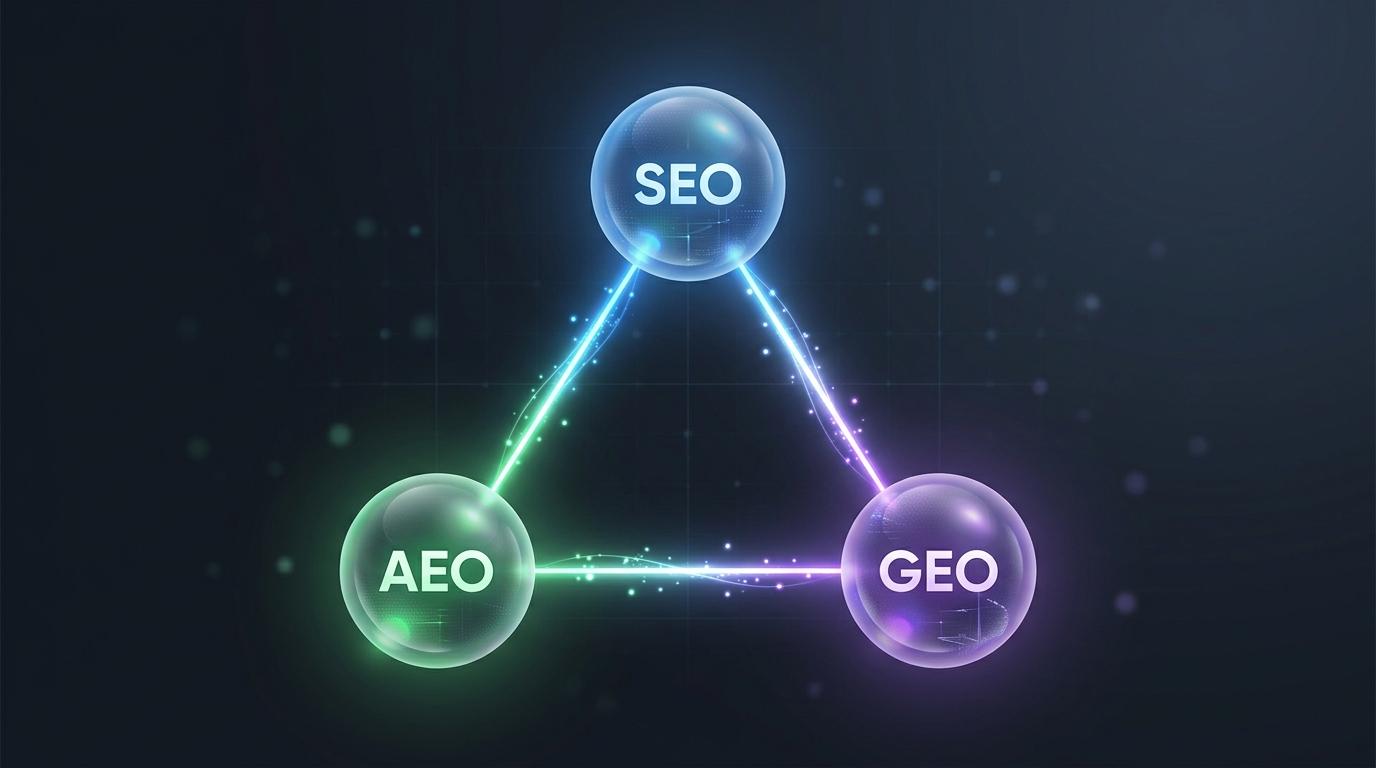
For a deeper comparison of optimization strategies across all platforms, see our guide on AEO vs GEO vs SEO: What’s the Difference. For the broader strategic framework, read our AI search optimization guide.
Common Mistakes to Avoid
Focusing only on your own site. On-site content optimization is necessary but not sufficient. If you’re not building third-party mentions simultaneously, your citation ceiling is low.
Ignoring Bing. Many brands check Google Search Console religiously but never verify their Bing index status. Since ChatGPT’s web retrieval runs on Bing, this blind spot directly limits your visibility.
Blocking AI crawlers. Some sites added GPTBot blocks when AI crawlers first appeared. If you haven’t reviewed your robots.txt recently, check it now. The cost of blocking far outweighs any perceived benefit.
Publishing once and never updating. AI engines reward freshness. Content that isn’t updated within 30 days loses citation eligibility progressively. Set a refresh cadence for your most important pages.
Treating this as “just more SEO.” The tactics overlap with traditional SEO, but the mechanics are fundamentally different. SEO optimizes for position on a ranked list. ChatGPT optimization builds citation confidence across a knowledge graph. The mental model matters because it changes what you prioritize.
Expecting overnight results. Measurable citation improvements typically begin within 8-12 weeks of targeted optimization. Sustained AI search presence takes 3-6 months to build. The brands seeing results today started building citation density 6-12 months ago.
What to Expect: A Realistic Timeline
Week 1-2: Fix technical requirements. Get indexed in Bing, unblock AI crawlers, implement schema markup, create llms.txt. These changes have immediate effect on your eligibility for live retrieval.
Month 1-2: Optimize on-site content and begin third-party listing efforts. Submit to review platforms, publish your first guest posts, start building Reddit presence. You may begin appearing in long-tail, specific queries during this phase.
Month 2-4: Citation density compounds. As more third-party sources mention your brand consistently, the model’s confidence grows. You’ll start appearing in broader category queries, not just niche ones.
Month 4-6: Flywheel effects kick in. Brands that invested early and stayed consistent see more citations per query, increasing dark funnel traffic (people who discover you through AI but arrive at your site through direct or branded search), and rising branded search volume.
The compounding nature of AI citations means that early investment pays disproportionate returns. Every citation reinforces your entity authority, making the next citation more likely. The brands losing ground in 2026 are the ones who assumed this could wait.
Start Now
The window for early-mover advantage in ChatGPT visibility is still open, but it’s narrowing as more brands invest in AI search optimization. The foundational work — entity clarity, content structure, third-party mentions, freshness — compounds over time. Starting today puts you months ahead of competitors who are still debating whether AI search matters.
Begin with an audit: check your ChatGPT visibility for free with our dedicated ChatGPT rank tracker. Enter your brand and target keywords, see exactly how ChatGPT responds to queries in your space, and identify your biggest gaps. No signup required, results in 30 seconds.
Then work through the 8-step playbook above systematically. Fix the technical basics in week one, optimize your content in weeks two through four, and build citation density as an ongoing practice.
For the complete strategic framework covering all AI platforms, explore our AI search optimization guide and our generative engine optimization definitive guide.

![AI Search Optimization: How to Get Cited by ChatGPT, Perplexity & Google AI [2026]](/_next/image?url=%2Fblog%2Fai-search-optimization%2FWebpage_document_connecting_AI_i%E2%80%A6_202604291551.jpeg&w=3840&q=75)